US rallies allies to secure Hormuz as Tehrans attacks persist. El título no debe incluir ningún
Welcome to our live coverage of day 17 of the Iran war, as Tehran continues to fire drones at neighbouring countries while US-Israeli intervention continues.
The US said it conducted extensive operations across Iran over the weekend, in a campaign that has now expanded to the country’s Kharg Island, responsible for some 90% of the country’s oil exports.
The attacks continued amid a prolonged standoff over the chokepoint Strait of Hormuz through which roughly a fifth of the world’s oil normally flows.
Iran has carried out attacks against oil and cargo vessels in the strategic waterway, which has remained effectively closed, causing global energy prices to soar.
US President Donald Trump said he was assembling a global coalition to help control the strait and escort stranded vessels to reel in oil costs. Brent crude continues to trade at over $105 a barrel as of Monday.
Follow our live blog for the latest updates from our journalists in the region and worldwide.

Brussels weighs naval missions to reopen Strait of Hormuz
The European Union is weighing two types of naval missions to help reopen the Strait of Hormuz, after US President Donald Trump demanded international collaboration in the effort to resume oil exports and end surges in crude prices.
“It is in our interest to keep the Strait of Hormuz open, and that’s why we are also discussing what we can do in this regard from the European side,” said Kaja Kallas, the EU’s foreign policy chief.
She made the announcement ahead of a gathering of the bloc’s foreign ministers in Brussels on Monday.
Rising prices for energy and fertilisers has brought the war in Iran to the top of their agenda, she said.
Kallas said the EU could expand its Aspides naval mission to protect shipping in the Red Sea up into the Persian Gulf or form a “coalition of the willing” with member nations contributing military capacity on an ad hoc basis.
Iraq’s oil minister says new route for oil exports set to open
Iraqi Oil Minister Hayan Abdul-Ghani said in a video statement on Monday that a pipeline from the northern city of Kirkuk to Turkey will be operational within a week, allowing the country to resume oil exports interrupted by the ongoing war.
Iraq previously exported around 3.4 million barrels of oil a day through its southern port of Basra, he said, but “in light of the military operations and the closure of the Strait of Hormuz, Iraqi oil exports stopped two or three days after the beginning of the war in the region.”
Abdul-Ghani said the pipeline from Kirkuk to Turkey, with a capacity of 200,000 to 250,000 barrels a day, is currently undergoing hydrostatic testing.
The route will bypass the semi-autonomous Kurdish area in northern Iraq after Baghdad could not reach an agreement with local authorities over conditions for exporting via another pipeline in the region.
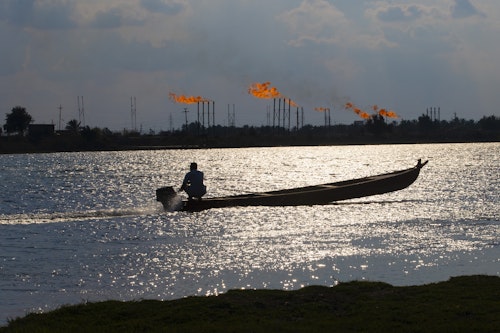
US efforts to protect Strait of Hormuz continue, military commander says
The top US military commander in the Middle East says American forces are zeroing in on Iran’s threats to freighters carrying oil and natural gas through a vital chokepoint in the Persian Gulf.
“We will continue to rapidly deplete Iran’s ability to threaten freedom of navigation in and around the Strait of Hormuz,” Admiral Brad Cooper, the head of US Central Command, said in a video posted to X on Monday.
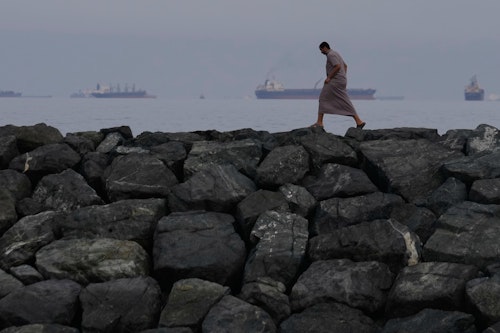
Iranian strikes on commercial vessels have effectively stopped shipping traffic in the waterway, through which a fifth of the world’s oil is transported.
That has dramatically increased the price of oil and put pressure on Washington to do something to ease the pain for consumers.
Update from CENTCOM Commander on Operation Epic Fury: pic.twitter.com/oGJ3QJBz5o
— U.S. Central Command (@CENTCOM) March 16, 2026
‘Europeans have been incredibly supportive,’ UAE foreign minister tells Euronews
Speaking to Euronews, UAE Minister of State at the Ministry of Foreign Affairs Lana Nusseibeh said European governments have been among the most engaged international partners since the crisis began.
“We’ve been in frequent contact with different governments around the world since this has started, but I would say the Europeans have been incredibly supportive,” she said.
You can read the full interview by Jane Witherspoon and Toby Gregory below.
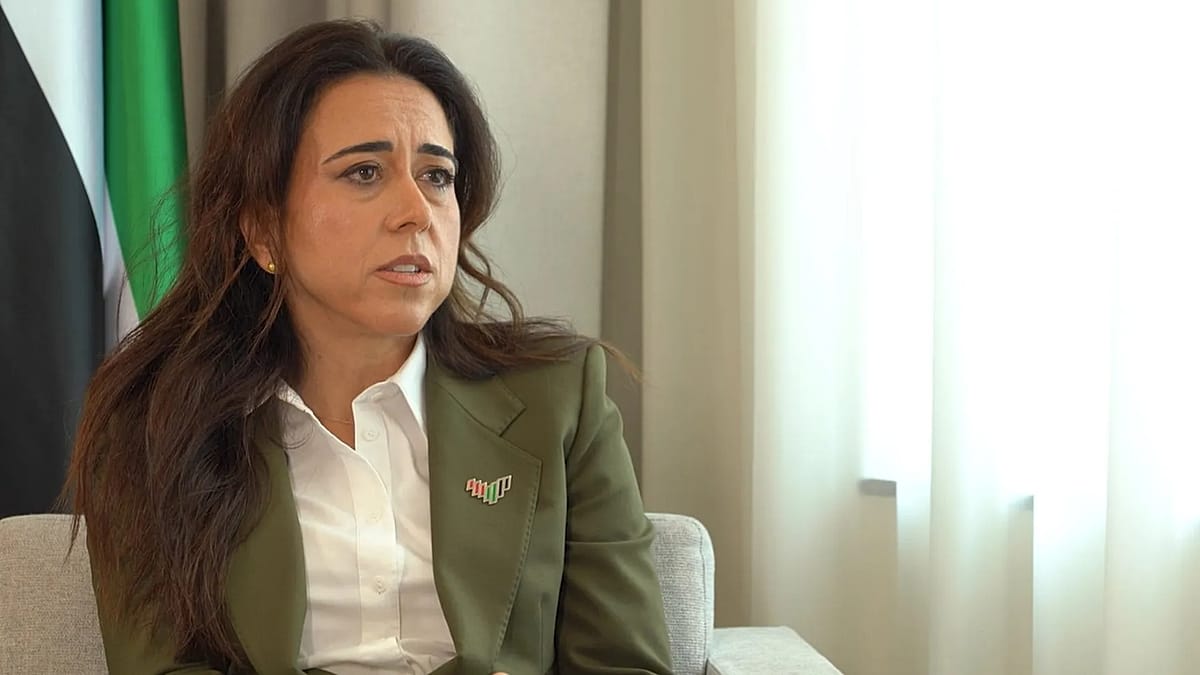
‘Europeans have been incredibly supportive,’ UAE top diplomat says
As the Iran war enters its third week, the United Arab Emirates is sending a clear message to European governments and citizens: stability in the region is clo…
Air raid alert issued in Doha, Euronews journalists say
An air raid alert has been issued in Doha, Euronews journalists in the Qatari capital are reporting.
It’s the first such alert in the city in 48 hours.
More to follow.
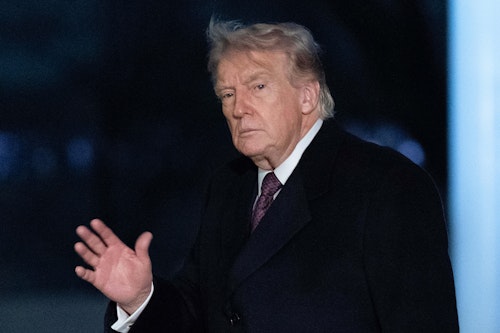
Trump says he may delay China trip as Iran war roils oil prices
US President Donald Trump said he may delay his China trip due to the Iran war, but Treasury Secretary Scott Bessent said on Monday it’s not to pressure Beijing on the Strait of Hormuz.
Bessent said any delay to Trump’s trip to Beijing wouldn’t be because of disagreements over the Iran war or efforts to reopen the Strait of Hormuz.
“If the meeting for some reason was rescheduled, it would be rescheduled because of logistics,” he said. “The president wants to remain in DC to coordinate the war and travelling abroad at a time like this may not be optimal.”
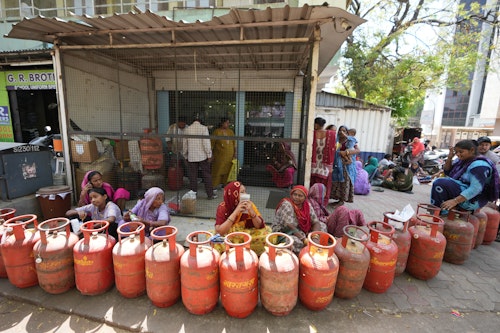
India expecting LPG ships that transited the Strait of Hormuz
India’s shipping ministry said on Monday that an Indian-flagged vessel carrying liquefied petroleum gas is expected to arrive at port later in the day with more than 40,000 metric tons of fuel.
Local media reported that the vessel sailed from Fujairah in the United Arab Emirates.
A second ship is scheduled to dock on Tuesday, the ministry said. Both vessels crossed the Strait of Hormuz on Saturday.
Officials said 22 Indian-flagged vessels remain west of the strait.
Italy signals reluctance to Trump’s call to help open Strait of Hormuz
Italy is the latest country to react cautiously to Trump’s demand that allies help open the Strait of Hormuz.
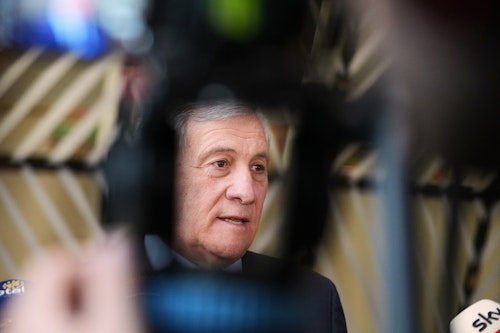
Italian Foreign Minister Antonio Tajani told reporters in Brussels on Monday that Italy backs reinforcing EU naval missions in the Red Sea.
But he added: “However, I don’t think these missions can be expanded to include the Strait of Hormuz, especially since they are anti-piracy and defensive missions.”
US President Donald Trump said he has demanded about seven countries send warships to keep the Strait of Hormuz open, as Iranian strikes continued to rain down on Gulf countries.
Qatar says diplomacy with Iran possible ‘if they stop the attacks’
Diplomatic talks with Iran are only possible if it ceases its attacks, Qatar’s foreign ministry spokesperson said on Monday, as Tehran presses its missile and drone campaign against Gulf states.
“If they stop the attacks, then we can find a way out with diplomacy. But as long as our countries are being attacked, this is not the time to establish committees, it’s the time to take a very principled position (on) protecting our countries and for them to stop attacking us immediately,” foreign ministry spokesperson Majed al-Ansari said.
Starmer says any plan to reopen Strait of Hormuz ‘won’t be’ a NATO mission
Prime Minister Keir Starmer said on Monday that a plan the UK is working on with allies to reopen the Strait of Hormuz during the Middle East war would not involve NATO.
“Let me be clear, that won’t be and it’s never been envisioned to be a NATO mission,” Starmer told reporters.
His comments came after President Donald Trump said NATO faces a “very bad” future if US allies fail to help open the key oil transport route.
Non-Iranian tanker transits Hormuz with transponder on
A non-Iranian oil tanker transited the Strait of Hormuz with its automatic transponder system activated, despite major disruption to shipping in the crucial waterway from the Middle East war, monitor Marine Traffic said on Monday.
“The Aframax tanker Karachi, carrying Abu Dhabi’s Das crude, has become the first non-Iranian cargo to transit the chokepoint while broadcasting its AIS signal, suggesting that select shipments may be receiving negotiated safe passage,” Marine Traffic said in a statement.
First non-Iranian cargo transits Strait of Hormuz with AIS on
The Aframax tanker Karachi, carrying Abu Dhabi’s Das crude, has become the first non-Iranian cargo to transit the chokepoint while broadcasting its AIS signal, suggesting that select shipments may be receiving… pic.twitter.com/Q6j6W3Cxz3
— MarineTraffic (@MarineTraffic) March 16, 2026
Iran says Strait of Hormuz is closed only to US, Israel and their allies
Iran’s top diplomat has said that the key Strait of Hormuz is only cut off for vessels of the United States, Israel and their allies.
“From our perspective it is open,” Foreign Minister Abbas Araghchi said of the strait. “It is only closed to our enemies, to those who carried out unjust aggression against our country and to their allies.”
Araghchi spoke at a press conference in Tehran on Monday.
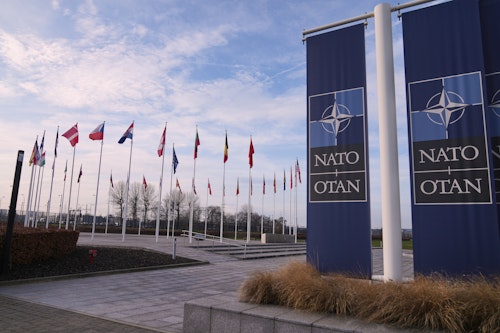
Iran war ‘nothing to do with NATO,’ German government says
The war in Iran has “nothing to do with NATO” and is “not NATO’s war,” German Chancellor Friedrich Merz’s spokesperson said on Monday.
US President Donald Trump on Sunday called for nations including South Korea, France, China and the UK to help ensure safe passage in the Strait of Hormuz, which Iran has declared closed to US and US-allied traffic.
He later upped the pressure on NATO allies, telling the Financial Times newspaper that the alliance faced a “very bad” future if its members did not do their bit to reopen the strait.
“NATO is an alliance for the defence of territory” and “the mandate to deploy NATO is lacking” in the current situation, Merz’s spokesman Stefan Kornelius told a regular press briefing.
Germany needed to know from Israel and the United States “at what point the military objectives in Iran will have been achieved,” a foreign ministry spokesperson said at the same briefing.
At a separate briefing on Monday, Defence Minister Boris Pistorius said Germany wanted all those involved to prevent “further military escalation.”
“There will be no military participation” from Germany but Berlin is prepared to support diplomatic efforts to “to ensure safe passage through the Strait of Hormuz,” he said.
“What does Donald Trump expect from a handful of European frigates in the Strait of Hormuz that the mighty US navy cannot manage alone? This is the question I find myself asking,” Pistorius said.
Iranian FM says Tehran ready to take war ‘as far as’ necessary
Iran’s Foreign Minister Abbas Araghchi said on Monday that Tehran had shown it was ready to take the war as far as necessary.
“I think by now they (US and Israel) have learned a good lesson and understood what kind of nation they are dealing with, one that does not hesitate to defend itself and is ready to continue the war wherever it may lead, and take it as far as necessary,” said Araghchi during a weekly foreign ministry briefing.
Since the beginning of the war on 28 February, Tehran has been launching daily missile and drone salvos on neighbouring countries, claiming it only targets US military facilities in the region.
Evidence on the ground, including that seen by Euronews journalists, shows that Tehran’s attacks have also been striking civilian targets, including airports, schools, residential buildings and hotels, as well as energy infrastructure in the Gulf.
UK working with allies on ‘viable’ plan to reopen Hormuz, Starmer says
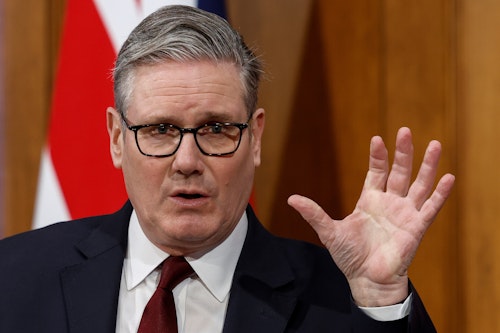
UK Prime Minister Keir Starmer said Monday that Britain was working with allies to develop a “viable” plan to reopen the Strait of Hormuz, the vital oil transport conduit that Iran effectively shut during the ongoing war.
“We’re working with all of our allies, including our European partners, to bring together a viable collective plan that can restore freedom of navigation in the region as quickly as possible and ease the economic impacts,” Starmer told reporters, adding he had discussed the situation with US President Donald Trump.
The UK leader added that while Britain was “taking the necessary action to defend ourselves and our allies, we will not be drawn into the wider war”.
Iran war aims ‘need more clarity’, says German foreign minister
Germany’s top diplomat Johann Wadephul said on Monday it will be important for the US and Israel to define “when they consider the military aims of their deployment to have been reached” in the ongoing Iran war, now in its third week.
Before meeting his EU counterparts in Brussels, Wadephul said he told US and Israel more clarity was needed.
He also said the Iranian government poses a significant danger to the region, the freedom of shipping and the global economy and “this danger definitely must not continue.”
Wadephul said without elaborating that he would back sanctions against those responsible for blocking the Strait of Hormuz.
He said that once there is clarity on the US-Israeli aims, it will be time for a phase in which “a security architecture for this whole region” is defined – a process that will entail speaking to Tehran.
UK sends funds to Lebanese humanitarian groups amid displacement crisis
The UK is sending £5 million pounds (€5.8 million) to humanitarian organisations in Lebanon.
The funds are intended to help provide food, water and shelter for some of the more than 800,000 people displaced by Israel’s offensive against Iran-backed Hezbollah targets.
Foreign Secretary Yvette Cooper says she is “gravely concerned about the developing conflict in Lebanon and the scale of the humanitarian impact.”
She condemned Hezbollah’s strikes on Israel and also says the displacement of hundreds of thousands of Lebanese people by Israeli operations “is completely unacceptable.”
Cooper says London is working with European allies and the US to prevent the conflict from escalating.
Bahrain reports missile and drone attacks
Bahrain’s Defence Ministry says air defence systems have responded to attacks on Monday morning to engage with a freshly fired barrage from Tehran.
The ministry says four missiles and three drones were fired and have been intercepted. No casualties or damage were immediately reported.
Israel sends troops into Lebanon for ‘limited’ operation
The Israeli Defence Forces says it sent additional ground troops into Lebanon for what it calls a “limited and targeted ground operation.”
Military spokesman Nadav Shoshani says the latest deployment is meant to defend Israeli border communities against attacks from the Hezbollah militant group.
He added that Hezbollah has sent hundreds of fighters from its elite Radwan unit towards the border since the Iran-backed group entered the war two weeks ago.
In a post on X, the IDF says the operation aims to “strengthen a forward defensive posture, which includes the dismantling of terrorist infrastructure and the elimination of terrorists operating in the area, to create an additional layer of security for residents of northern Israel.”
⭕️ IDF troops have begun limited and targeted ground operations against key Hezbollah strongholds in southern Lebanon, aimed at enhancing the forward defense area.
This activity is part of broader defensive efforts to establish and strengthen a forward defensive posture, which…
— Israel Defense Forces (@IDF) March 16, 2026
‘Iran must not be allowed to hold the global economy hostage,’ Nusseibeh tells Euronews
“We are grateful to the community of Europeans living here who call this place home. We are proud of the resilience and the adaptability that you have shown in this challenging times,” said Lana Nusseibeh, the UAE’s Minister of State at the Ministry of Foreign Affairs, as she spoke to Euronews in an exclusive interview.
Speaking on global turbulence as crude prices continue to soar amid the war in Iran, Nusseibeh stressed that everything from energy bills to food prices are expected to surge, including in Europe.
“Unless UN Security Council Resolution 2817 is enforced, and it is binding on Iran that they abide by it, there are going to be ramifications, there are going to be implications for global energy prices, and that will also impact bills in grocery stores, bills in petrol stations, the price of food,” she said.
“So it’s important today that Europe understand, and this would be my message to my European friends and partners.”
Addressing the European expat community residing in the UAE, Nusseibeh noted that their continued presence is not only a display of solidarity during the country’s challenging times, but also defending of a model of peace, laws and coexistence.
“What you are defending here is not only the UAE. What you are defending here is a model. It’s a model of coexistence, of tolerance, of peace for the wider region, but it’s a model that also wants to export stabilisation in commodities, in energy, and in security and peace.”
Nusseibeh says those who oppose that model are ideologically aligning themselves with Iran, a regime she described as a “rogue actor” that aims to “export nihilism to the whole international system.”
‘We take the safety of the 500,00 European residents incredibly seriously’, Lana Nusseibeh, UAE Minister of State tells Euronews
Euronews spoke with Lana Nusseibeh, the UAE’s Minister of State at the Ministry of Foreign Affairs, and special envoy to the EU on the ongoing attacks against the country as Iran continues to fire barrages of dozens of missiles and drones in retaliation for US-Israeli attacks.
“I think the priority right now is defending the country against these attacks and ensuring it doesn’t disrupt normal life, but of course, we have been preparing for various scenarios in a very turbulent region for decades, so these are not new plans,” said Nusseibeh.
Speaking to Euronews in an exclusive interview, Nusseibeh, who previously also served as Abu Dhabi’s Ambassador to the UN, underscored the country’s efforts at ensuring the safety of the roughly half-a-million Europeans who reside across the UAE.
“We have had contingency plans in place since prior to this point. We take the safety and security of the 500,000 European residents, for example, who reside here, and I know that’s a domestic audience that we are also speaking to, incredibly seriously.”
The Emirati official also noted that her country hopes to expand relations with Brussels further, indicating a desire to boost trade volume and strike a free trade agreement.
“And I think our trade ties with Europe at €65 billion a year is a robust signal that we are also open for investment. So we are negotiating a free trade agreement with the European Union at the moment,” she added.
“European partners have come in to assist us and to also protect their own communities here in the UAE, and it is Iran that is very clearly isolated on the international stage.”
Israeli military says 70% of Iranian launchers destroyed
The IDF says it has destroyed an estimated 70% of Iran’s missile launchers during the first two weeks of the war.
Military spokesman Nadav Shoshani told reporters on Monday that while Tehran continues to fire missiles at Israel, the number of launches has been greatly reduced.
He says Israel has carried out some 7,600 strikes in Iran, knocking out 85% of the country’s air defences and targeting a number of Iranian nuclear sites previously struck in a joint operation with the US last year.
Shoshani says the war will go on “for as long as needed” and says Israel has thousands of targets it is prepared to strike and continues to produce new targets every day.
China offers no comment on Trump’s Strait of Hormuz policing request
A Chinese government spokesperson did not respond directly to questions about Trump’s request for military support from several countries to help reopen the Strait of Hormuz.
The Foreign Ministry’s Lin Jian, at a daily briefing in Beijing, instead repeated China’s calls for an end to the fighting, noting the impact on energy and goods trade.
Trump said in an interview with The Financial Times that Washington would like an answer from Beijing before his planned trip to meet his counterpart Xi Jinping in about two weeks, and that “we may delay.”
Lin said China and the US have maintained communication on Trump’s visit.
“Head-of-state diplomacy plays an irreplaceable strategic guiding role in China–US relations,” he said.
Trump says NATO faces ‘very bad future’ if allies do not help open Strait of Hormuz
US President Donald Trump said on Sunday that NATO faces a “very bad” future if Washington’s allies fail to help open the Strait of Hormuz, the critical oil transport conduit effectively shut by Tehran amid the war in Iran.
In a brief interview with The Financial Times, Trump said that as the United States has aided Ukraine in the war with Russia, he expects Europe to help on the Strait of Hormuz, whose closure has sent energy prices soaring around the world.
“If there’s no response or if it’s a negative response I think it will be very bad for the future of NATO,” said Trump, who over the years has criticised the alliance as freeloading on US largesse.
Trump also said an upcoming summit in Beijing with his Chinese counterpart Xi Jinping could be delayed as he presses for China’s help to open the strait. Beijing is one of the biggest beneficiaries of the strategic waterway, as they purchase around 80% of Iran’s oil exports.
“We’d like to know before (the summit),” Trump said, noting that China as well as many European countries rely on the strait more than the United States on oil flowing from the Gulf.
“It’s only appropriate that people who are the beneficiaries of the Strait will help to make sure that nothing bad happens there,” said the US president.
He separately told reporters traveling with him on Air Force One that the US was in discussions with “about seven” countries on getting help to reopen the Hormuz Strait.
Asked about specific help he was looking for, Trump told the FT he wanted minesweepers as well as “people who are going to knock out some bad actors that are along the (Iranian) shore.”
Palestinian civilian killed in missile attack on Abu Dhabi, authorities say
A Palestinian civilian was killed in a missile attack early on Monday in the United Arab Emirates capital Abu Dhabi, authorities said.
The Abu Dhabi Media Office said a missile fell on a civilian vehicle in the al-Bahyah area. The death raises the toll to seven people in the UAE since the US and Israel fired the war’s opening salvo on 28 February.
Abu Dhabi authorities have responded to an incident involving a missile falling on a civilian vehicle in the Al Bahyah area, resulting in one casualty of Palestinian nationality.
The public is advised to obtain information only from official sources and to avoid spreading…
— مكتب أبوظبي الإعلامي (@ADMediaOffice) March 16, 2026
Drone strike starts fire at UAE oil facility
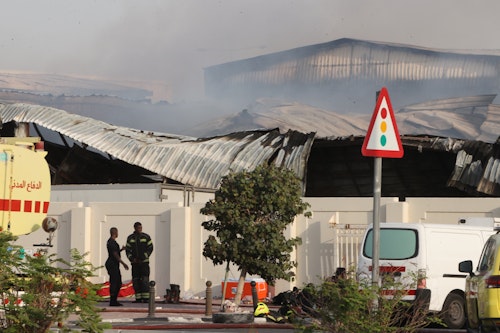
A fire broke out on Monday following a drone attack on an industrial oil facility in Fujairah, one of the United Arab Emirates’ seven emirates, according to authorities.
The Media Office in Fujairah said a drone targeted the city’s Oil Industry Zone, causing an “advanced” fire, but reported no casualties.
pic.twitter.com/xuEqWgPLJe
— Fujairah Media Office (@FjMediaoffice) March 16, 2026
More drone attacks reported over Riyadh
Saudi Arabia says it intercepted three drones on Monday morning over its capital, Riyadh, and the nation’s oil-rich western region.
The Saudi Defence Ministry says no casualties or damage were reported.
The ministry added that more than 60 drones targeted the country within a few hours.
Some flights resume at Dubai airport
United Arab Emirates officials say Dubai International Airport has gradually resumed some flights at hours after a drone strike.
Dubai Media Office, which speaks on behalf of authorities in the city-state, quoting Dubai Civil Aviation Authority, announced that flights are operating to select destinations.
“Dubai Civil Aviation Authority announces the gradual resumption of some flights to and from Dubai International Airport to selected destinations, following the temporary suspension implemented as a precautionary measure,” said the media office in a post on X.
“Passengers are advised to check with their airlines for the latest updates regarding their flights.”
It comes after Emirates airline announced that it had suspended all flights to and from Dubai following an attack on a fuel tank at the city’s main airport.
Dubai Civil Aviation Authority announces the gradual resumption of some flights to and from Dubai International Airport to selected destinations, following the temporary suspension implemented as a precautionary measure.
Passengers are advised to check with their airlines for…
— Dubai Media Office (@DXBMediaOffice) March 16, 2026
Brent crude trades near $105
=Brent crude oil is trading near the $105 per barrel level on Monday.
A barrel of Brent, the international standard, was up 1.6% at $104.73, dipping slightly after opening above $106 per barrel. It’s up more than 40% since the US and Israel launched their war on Iran on 28 February.
Share prices in Asia were mixed and US futures advanced.
Emirates suspends flights until further notice
Hours after a drone strike sparked a fire at Dubai’s main airport, Emirates – one of the UAE’s leading carriers – said in its latest update that all of its flights “to and from Dubai have been temporarily suspended.”
In a statement shared on X on Monday, the airline says it is working with authorities to restart operations when possible, urging passengers not to travel to the airport.
“The safety of our passengers and crew is our highest priority and will not be compromised.”
Dubai International Airport is the world’s busiest airport for international travel and a key hub for many routes linking the East and West.
All flights to and from Dubai have been temporarily suspended.
Please do not go to the airport.
Emirates will share updates when available. We would like to thank our customers for their understanding and patience.
The safety of our passengers and crew is our highest priority… pic.twitter.com/m5eIloT2wk
— Emirates Support (@EmiratesSupport) March 16, 2026
UAE intercepts more drone and missile attacks
The United Arab Emirates’ Defence Ministry said its forces were intercepting Iranian missiles and drones fired early on Monday morning.
It comes just hours after authorities in Dubai confirmed that a drone hit a fuel tank at the Dubai International Airport, prompting roads leading to the international hub to be temporarily closed.
Saudi crown holds phone call with UAE president amid continued Iranian attacks
Saudi Arabia’s Crown Prince Mohammed bin Salman held a phone call to discuss regional developments with the UAE’s President Mohamed bin Zayed Al Nahyan, according to a statement released by Saudi Arabia’s Foreign Ministry early on Monday.
The two leaders said the continued “Iranian attacks against Gulf Cooperation Council (GCC) countries represent a dangerous escalation that threatens regional security and stability,” adding that GCC states will continue efforts to defend their countries
Road and tunnel to Dubai International Airport closed, police says
Authorities in the United Arab Emirates have closed the main road and tunnel leading to Dubai International Airport after it was earlier reported that an Iranian drone hit a fuel tank at the airport, causing fire with no casualties.
Dubai Police urged drivers to use alternative roads.
Saudi air defences down large barrage of drones
Saudi Arabia’s Defence Ministry said early on Monday that it downed an additional large barrage of 35 drones in the country’s eastern region, one of the kingdom’s least dense, close to Iran and home to major oil installations.
This brings the total number of drones intercepted to at least 60 in the last few hours.
The ministry did not immediately report casualties or damage.
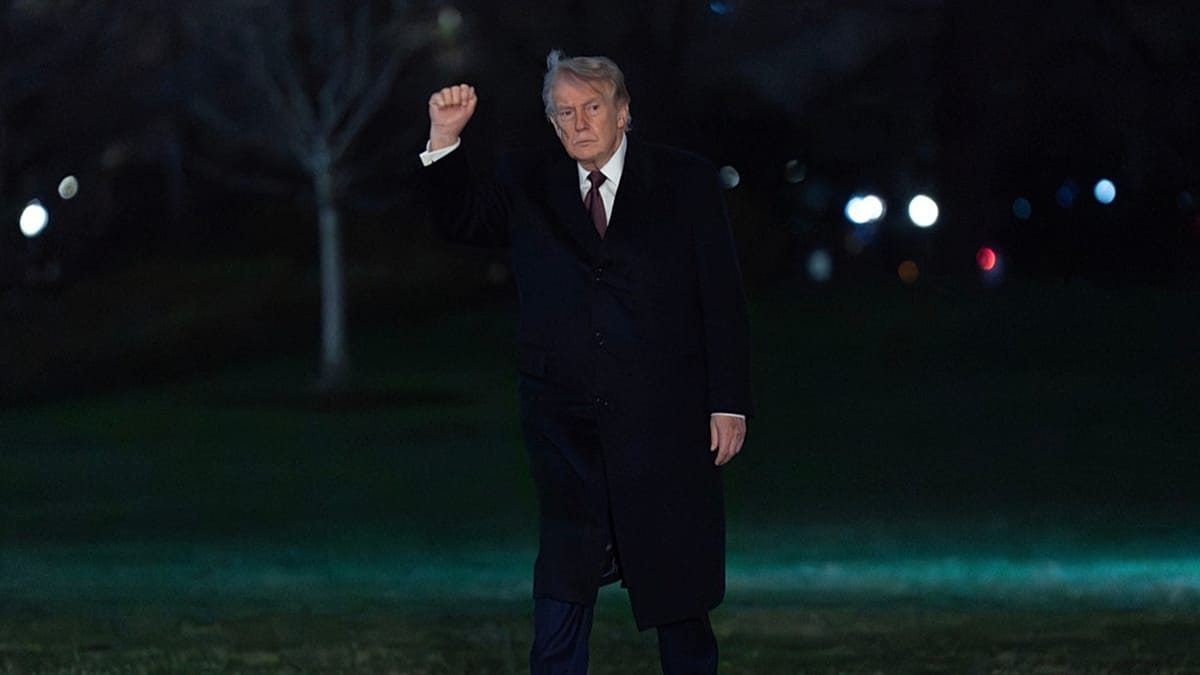
Trump demands ‘about seven countries’ to join coalition to police Hormuz Strait
US President Donald Trump says he has demanded seven countries to join an international coalition aimed at policing the chokepoint Strait of Hormuz on Sunday, sending warships and military assets to help escort oil vessels through as global crude prices continue to reel from the war in Iran.
The US president declined to name the countries heavily reliant on Middle East crude that his administration is negotiating with to join the initiative amid Iranian attacks, which have effectively closed the crucial waterway.
“I’m demanding that these countries come in and protect their own territory, because it is their own territory,” Trump told reporters on Sunday.
Read the full article:
Trump says he is assembling coalition to police Strait of Hormuz
Trump says attacks on Iran could last several more weeks despite soaring energy costs. The US president says he is assembling a coalition to help police the St…
Australia not sending warship to Strait of Hormuz, says minister
The Australian government says warships won’t be sent to the Middle East to keep the Strait of Hormuz open to international shipping following US President Donald Trump’s demands.
US President Donald Trump said that he has demanded “about seven countries” send warships to keep the strategic waterway, through which a fifth of the world’s oil exports pass, open, as Iranian strikes continued to rain down on Gulf Arab countries.
Australia’s Transport Minister Catherine King told local media outlets on Monday that she was not aware of Canberra receiving such a request.
“We won’t be sending a ship to the Strait of Hormuz. We know how incredibly important that is, but that’s not something that we’ve been asked or that we’re contributing to,” she said.
Australia said last week it was providing the UAE with an air force surveillance jet and air-to-air missiles to help defend against Iranian attacks, but a government statement said Australia was “not taking offensive action against Iran.”










Publicar comentário